Freight forwarding and 3PL · Global distribution network
Freight logistics cockpit
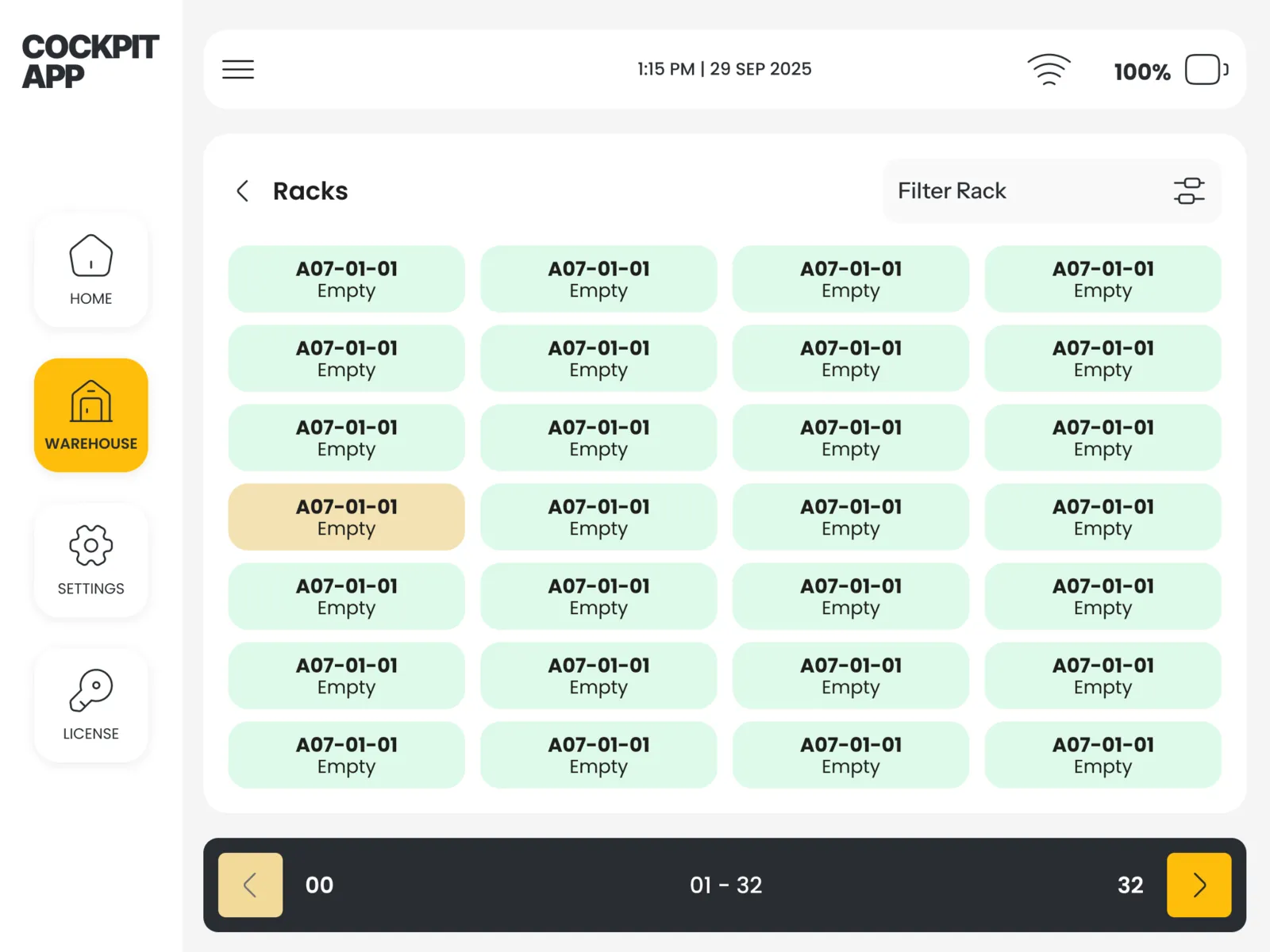
Warehouse location detection for a global logistics operator working across approximately thirty-nine countries. Rack, aisle and bay states held in one dense view that floor staff and planners read from the same source.
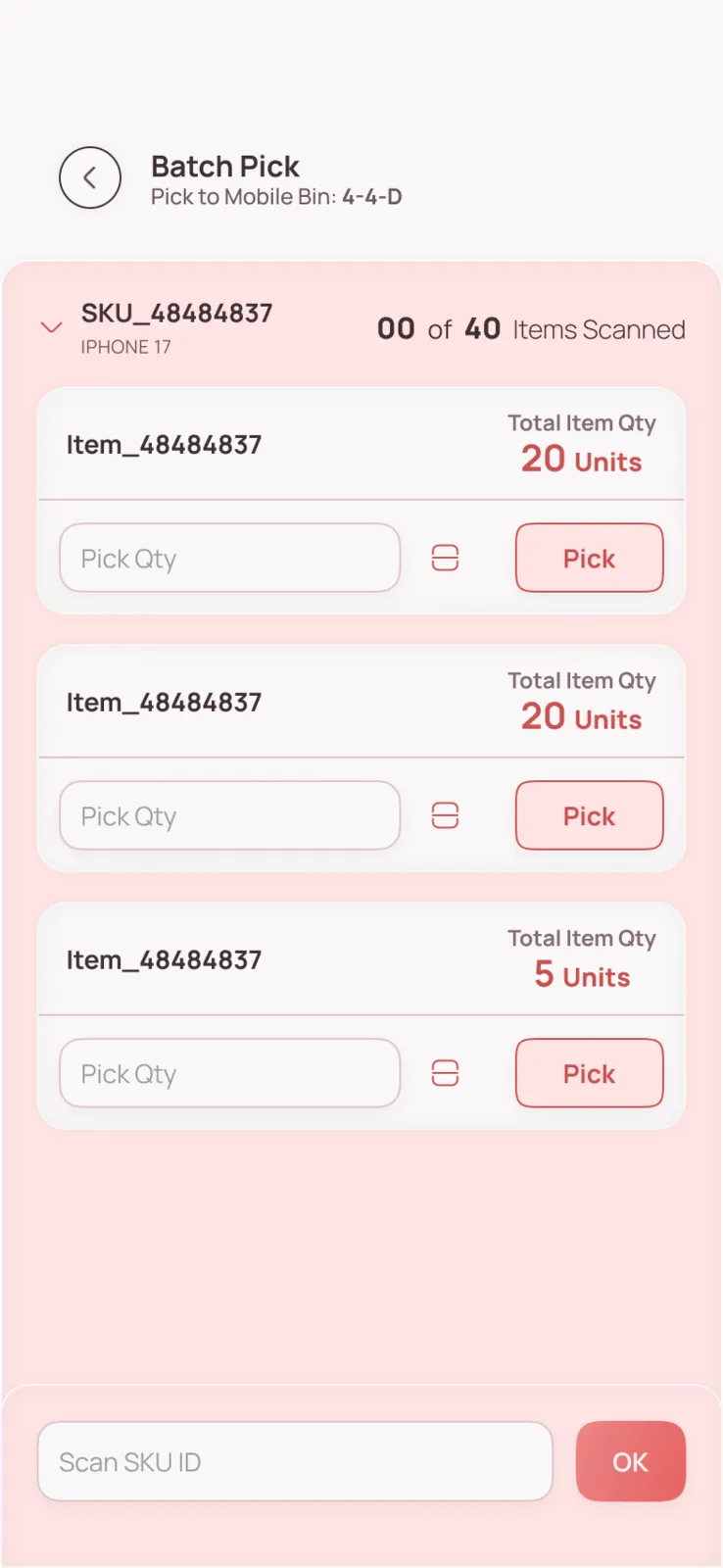
- Scan, then type
- The SKU field holds focus so the scanner drives the screen; quantity is the only thing entered by hand.
- Count in view
- Items scanned against the batch total stays pinned to the group header while the item list scrolls.
- Exception state
- A short pick tints the whole task, not one row, so the state survives a glance from a moving forklift aisle.
The problem
The building was known; the pallet was not.
Location detection produced far more state than any screen had been designed to hold: every rack, aisle and bay, in every facility, changing continuously. Planners wanted the network view. Floor staff wanted the one aisle in front of them.
Existing tooling answered neither well. Wide tables scrolled sideways past the point of use, and per-site views hid the exceptions that actually needed a decision.
The approach
One grid, two reading distances.
The rack grid is the primary object, and it is built to be scanned rather than read: occupancy and exception states legible at a glance, identifiers legible on approach. Filters narrow the same grid instead of switching to a different layout.
Because the operator runs in dozens of countries, the type scale, number formatting and label lengths were specified for translation and for longer location codes from the outset, and the components were written against React for the build team.
What shipped
- Location grid component
- Rack, aisle and bay states as one scannable object, with exception treatment defined per state.
- Design system and specs
- Tokens, components and interaction specs written against React for the implementing team.
- Internationalisation rules
- Type scale, numeral and label allowances set for multi-country deployment.
- Style guide in-file
- Kept inside the Figma source of truth so the team could onboard without a walkthrough.